Our Approach
It Begins with Wonder
Before children master movements, perform skills, or accomplish goals, they need space to become curious. They need room to explore, experiment, ask questions, and try. Kids Love Aerial begins there, with the sense of possibility that already lives within every child.
The beginning of learning
Wonder Is Already There
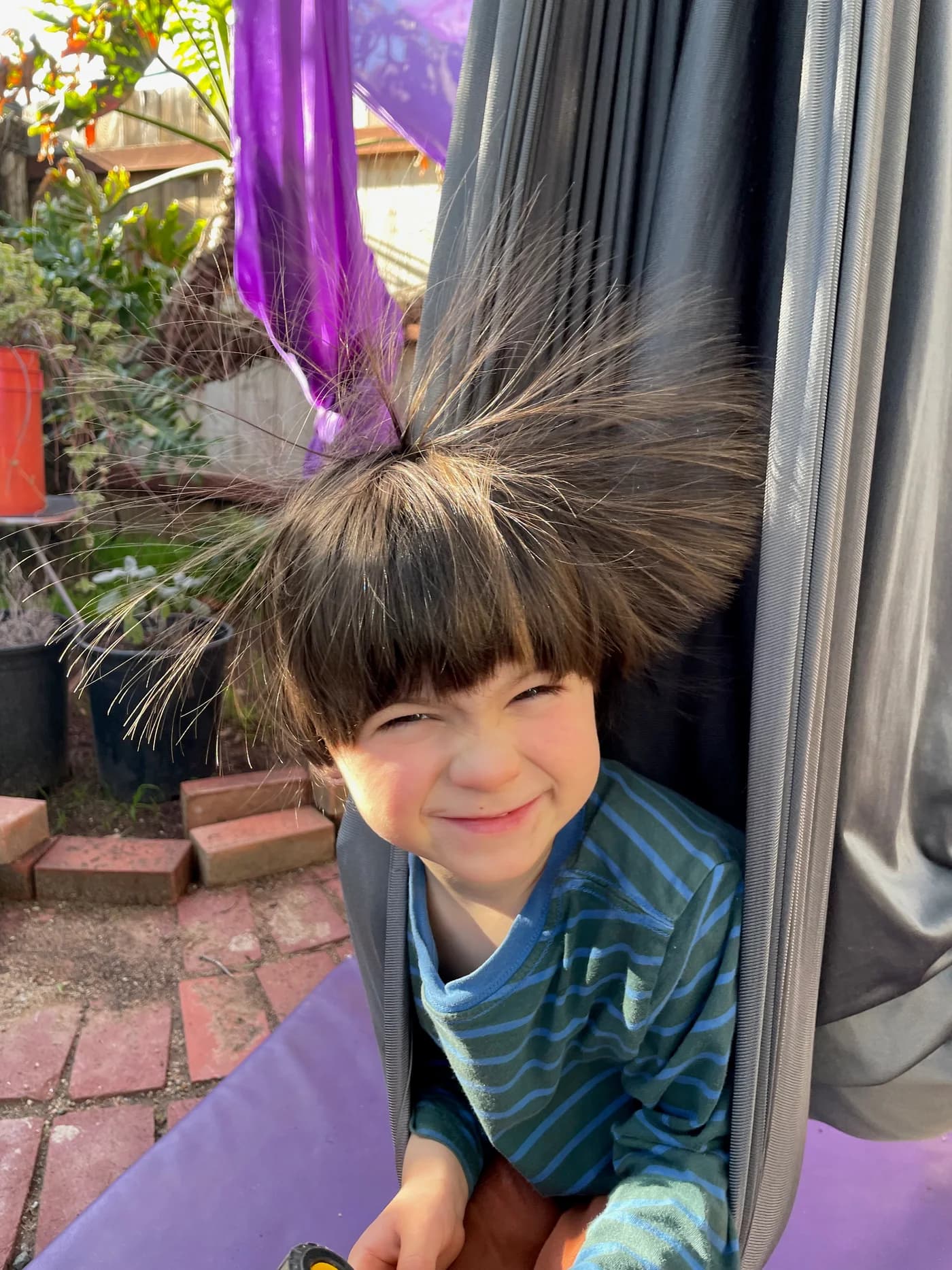
Wonder is the beginning of learning.
Children arrive with an incredible sense of curiosity. They reach toward what interests them, test what is possible, and learn by entering into an experience. Their questions are not always spoken. Sometimes a question looks like a hand touching the fabric, a body leaning in a new direction, or another try after something unexpected happens.
KLA does not begin by rushing that instinct toward achievement. It begins by protecting the child's natural desire to explore, discover, and understand the world through movement. Guidance is present, and so is structure, but neither is meant to crowd out curiosity.
Before there is confidence, there is curiosity.
Before there is mastery, there is exploration.
Before there is growth, there is the willingness to try.
Movement is a language
Learning Through Doing
Long before children can explain every idea in words, they investigate the world through movement.
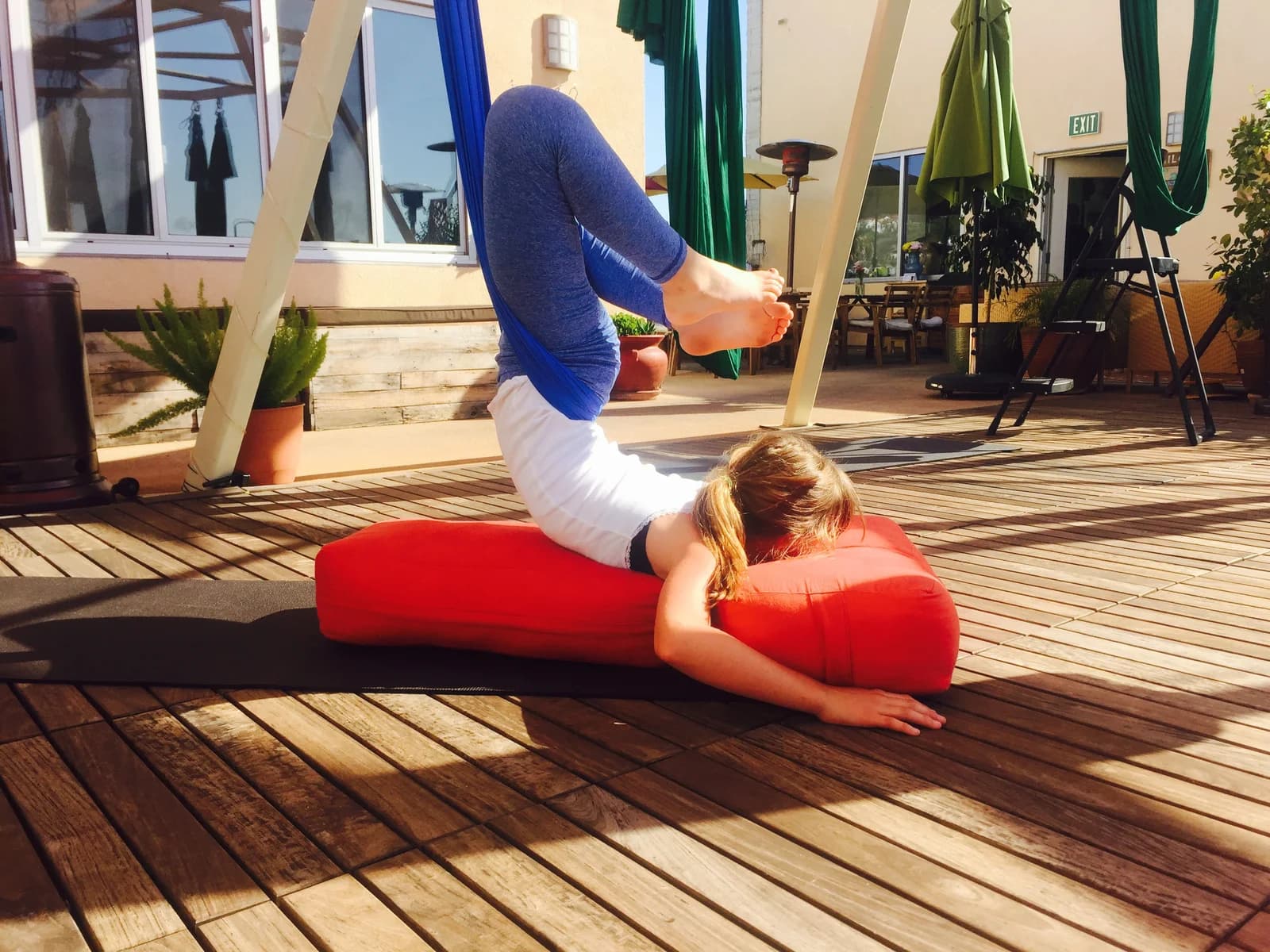
Within KLA, movement is not simply exercise and it is not only the performance of a physical skill. A climb can become a question about where to place a hand. A balance can ask for a choice. A swing can invite a child to notice timing, space, and what changes when the body moves differently.
Children can communicate through the way they approach an idea, solve a movement problem, or show what they have discovered. They can investigate their own possibilities and respond to the possibilities of the fabric. Every climb, swing, balance, reach, and fall has something to teach when a child has the time and support to notice it.
Play is serious learning
Interesting Is a Meaningful Place to Begin
Play is often treated as something that happens after the real learning is finished. KLA begins from a different belief: play is part of learning. When a child follows an idea because it is interesting, imagination and attention have somewhere to meet.
A playful invitation can lead to repetition without making repetition feel empty. It can make room for a child to change an approach, make a creative choice, collaborate, or discover a solution that was not demonstrated in advance. Trying something simply to see what happens can become a meaningful encounter with movement.
This does not mean leaving children without instruction. KLA offers guided discovery. The teacher shapes the environment, introduces ideas, and provides support while leaving enough room for a child to participate in the learning rather than only copy it. The goal is not to organize every moment around completing a trick.
Supported challenge
Supported enough to try.
Challenged enough to grow.
Meaningful challenge sits between what feels too easy to engage and what feels too overwhelming to approach. KLA looks for the place where a challenge can feel exciting, where support is close enough for a child to enter the experience and there is still something real to discover.
Support does not remove independence, and guidance does not replace discovery. A child may repeat a movement, experiment with a different choice, ask for help, or need more time before returning. The teacher pays attention to readiness and adjusts the invitation without taking the challenge away.
Meeting an appropriate challenge can contribute to a growing sense of capability. KLA does not promise a particular result. It creates a thoughtful setting in which trying, learning, and meaningful success can be experienced.
Every child is capable
Progress Is Personal
Children do not need to arrive at the same place at the same time for their learning to matter.
Each child begins with different strengths, interests, and experiences. They notice different details. They may need different kinds of support or different amounts of time. One child's meaningful next step may not look like another's.
KLA celebrates progress rather than comparison. That does not mean lowering expectations or removing challenge. It means meeting a child where they are, offering something worth reaching toward, and noticing the learning that happens along the way. A child's developing relationship with movement is more important than keeping pace with someone beside them.
Teachers are guides
Teaching with Attention
The teacher's role is not simply to demonstrate a movement and ask every child to reproduce it.
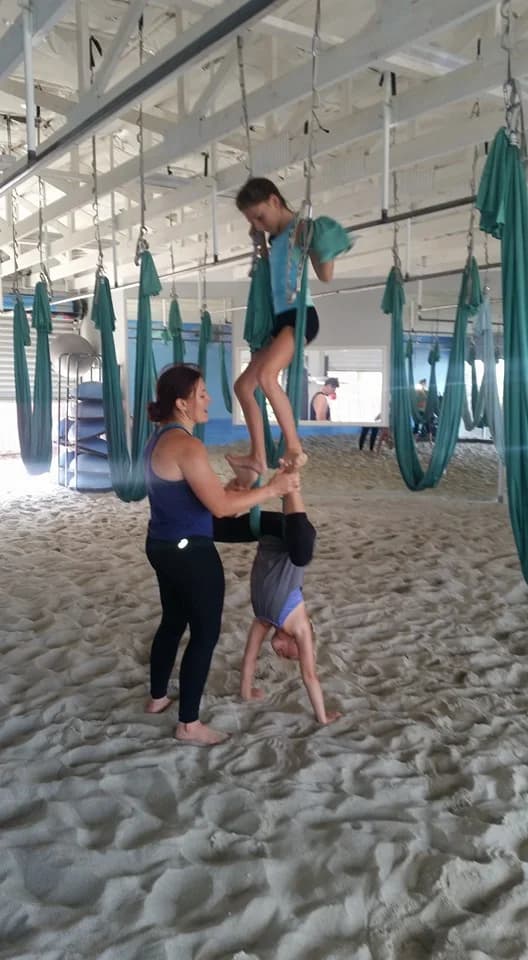
A KLA teacher observes. They encourage, ask thoughtful questions, introduce challenges, and create an environment in which children can safely discover answers for themselves. Sometimes a child needs clearer guidance or closer support. Sometimes they need more room to explore. Teaching means noticing the difference.
The teacher does not need to hold every answer before learning can begin. They can remain curious alongside the children, responding to what is happening rather than forcing every experience into the same path. In Hannahsita's philosophy, teachers remain lifelong learners too.
Curiosity instead of control
Encouragement instead of pressure
Partnership instead of perfection
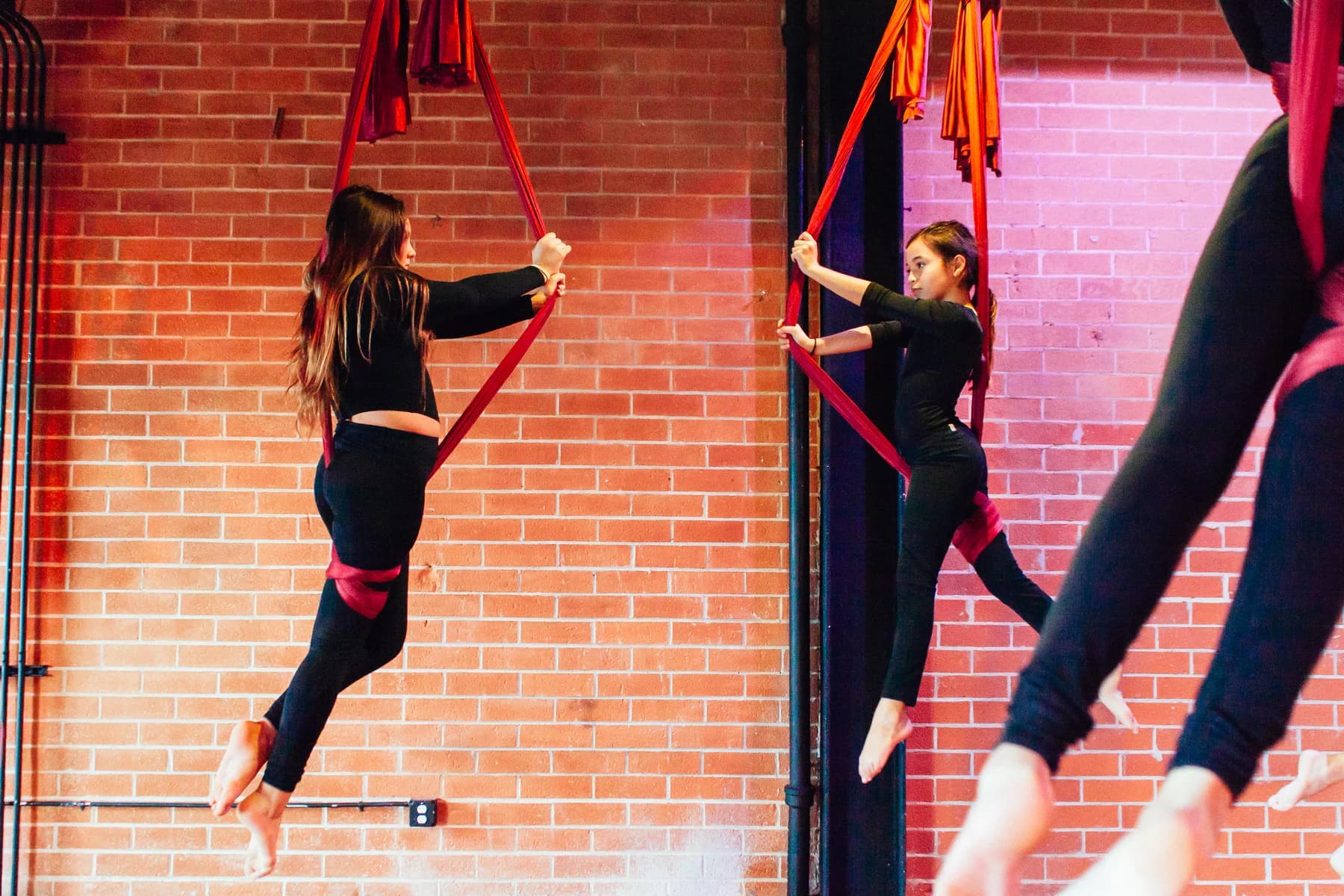
Relationships matter
Growth Happens Together
Learning does not happen entirely alone. Children experience movement in relationship with their own bodies, their teachers, their peers, their families, and the community around them.
Connection can be present when a teacher listens, when peers make room for one another, when a family notices a child's effort, or when a group shares an experience without turning it into a comparison. These relationships help shape the environment in which learning takes place.
KLA seeks to create community, not only classes. Growth happens through encouragement, shared experience, and the willingness to learn alongside one another. This is why connection comes before performance.
Aerial is the tool
The Fabric Opens a Different Kind of Space
Aerial fabric is unusual. It changes a child's relationship to the floor, to balance, to direction, and to what a movement can become. That difference can invite attention and possibility.
The fabric offers a place to explore, experiment, encounter a challenge, make choices, and discover new possibilities for movement. It can hold a problem to solve or an idea to follow. It can make a familiar action feel new enough to wonder about.
Aerial itself is not the entire purpose of KLA. The deeper experience concerns the child's relationship with curiosity, challenge, movement, and discovery. The fabric is the tool through which that experience can unfold.
Curiosity before perfection.
Confidence before complexity.
Connection before performance.